


Y.I
Research and Development
Department: Technology Development Department Research and Development Division
Year Joined: 2020
Major: Graduate Program in International Development Engineering (Mechanical Engineering)
Elasticity Theory
Tribology
Statics
Materials Science
Nanotechnology
 MinebeaMitsumiについて
MinebeaMitsumi is a global company engaged in a wide range of businesses, from precision machine components to electronic devices and system solutions. Since its founding, it has continuously provided high-quality products and services to customers worldwide by combining “master craftsmanship” with cutting-edge technology.
Our company pursues technological innovation across diverse fields including bearings, motors, sensors, and lighting devices, supporting various industries such as automotive, aerospace, medical equipment, and information and communications technology. Particularly in research and development, we have established an integrated system spanning fundamental research to applied development, with PhD-holding researchers at the core driving the creation of next-generation technologies.
Our company advances technological development from a global perspective, fostering an environment where individuals with diverse backgrounds can thrive and providing career paths that maximize each person's expertise.
Our company pursues technological innovation across diverse fields including bearings, motors, sensors, and lighting devices, supporting various industries such as automotive, aerospace, medical equipment, and information and communications technology. Particularly in research and development, we have established an integrated system spanning fundamental research to applied development, with PhD-holding researchers at the core driving the creation of next-generation technologies.
Our company advances technological development from a global perspective, fostering an environment where individuals with diverse backgrounds can thrive and providing career paths that maximize each person's expertise.

Ph.D. Employee Interview
Read detailed interviews about Ph.D. career choices.
Q1
Why did you choose this path?
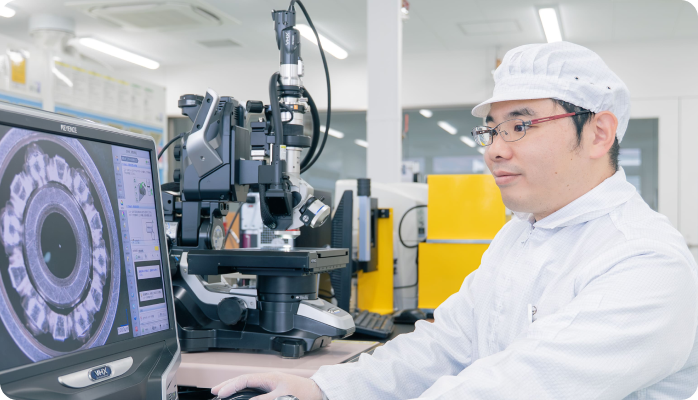
My strong desire to keep challenging new things is my starting point. I had aspired to pursue a doctorate since my master's program, but financial circumstances led me to enter the workforce first. However, the extremely demanding, sports-club-like corporate culture at my previous job didn't suit me. I resolved, “I must return to the path of research and see it through to my satisfaction,” and after earning my doctorate, I chose this company. I was convinced that my specialty, “elemental technology,” would be most effectively utilized not in assembly, but at a parts manufacturer where I could pursue microscopic phenomena.
Q2
What is the relationship with the doctoral program?
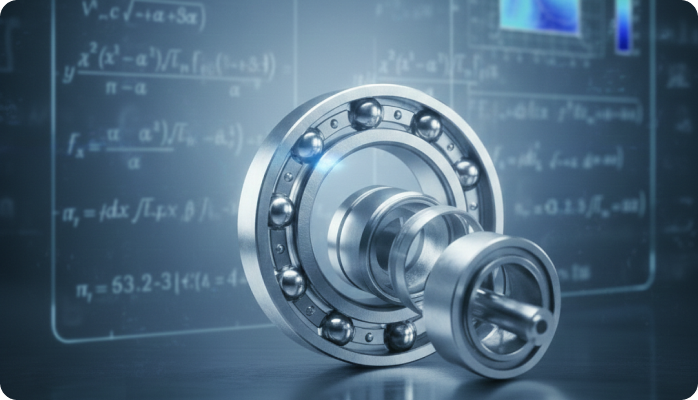
My master's research on friction in silicone rubber led me to develop a unique contact theory, which gained significant recognition through presentations at international conferences and other venues, giving me great confidence. During my doctoral studies, I transferred to a professor who interacted with global authorities in the field, pursuing contact theory for objects in even greater depth. Even in my current work, when evaluating the performance of bearings or aircraft components, the theories and physical insights from that time form the very foundation. Research and practice remain consistently connected through the themes of “contact” and “friction.”
Q3
What struggles or hard work (especially effort) did you experience regarding your career path or choices?
The most intense struggle of my career was the last-minute job hunt as my doctoral program deadline approached. By May of my final year, I finally had a clear path to earning my degree. However, by that point, most major companies had already filled their hiring quotas. Yet, I refused to give up. By directly reaching out to HR departments, I managed to secure interview opportunities through irregular channels, which opened new doors. Furthermore, having experienced an unsuitable environment at my previous job made me keenly aware of how crucial “initiative” and “casual dialogue” were to me. This realization drove me to devote my full energy to finding a workplace where I could truly thrive.
Q4
Did you experience any anxieties or challenges when returning to doctoral studies after working as a professional?
I felt uneasy about joining a new lab and tackling a different field in an unfamiliar environment.
Since the theme wasn't directly related to my master's work, I had to build everything from scratch—from the background setup to the solution methods—and challenges constantly piled up.
The greatest trial came at the end of my third year of doctoral studies, when I hit a wall in my progress and had to scrap all my research.
However, as I restarted in my fourth year, I resolved to pursue “the research I wanted to do most.” As a result, I finally achieved results I could be satisfied with.
Q5
What skills acquired during your doctoral studies are useful in your current job?
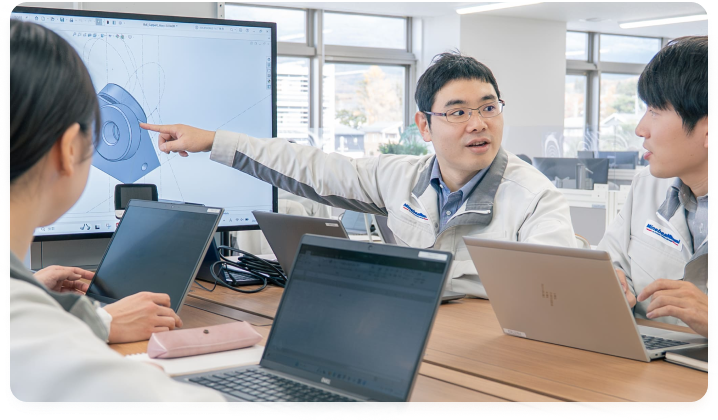
What has been particularly useful is “logical thinking”—organizing the background, objectives, and methods when facing unknown challenges—and “breakthrough capability”—the ability to independently derive solutions. In my current department, where chemists are in the majority and mechanical engineers are few, I often encounter situations where colleagues struggle to articulate “what the problem is.” Drawing on my experience mentoring many juniors during my lab days, I advance projects by interpreting their intentions through diagrams and identifying core issues to propose equipment development, such as endurance test machines.
Q6
During your job search as a doctoral candidate, what aspects of yourself do you believe were valued by our company?

I feel that my intuitive expectation that “this person would be a good fit” and my advanced expertise as a PhD were both valued. Although the recruitment timing was quite late, my supervisor at the time made an immediate decision, stating, “We need a mechanical engineer with a PhD.” I believe this was because they valued not just my knowledge, but also my practical ability to design equipment and verify theories myself. Furthermore, my ability to clearly articulate and communicate, based on my previous experience, “the kind of environment where I can deliver results” was positively perceived as contributing to a successful, well-matched hire.
Q7
Have you ever had an experience where you felt glad to have a PhD within the company?
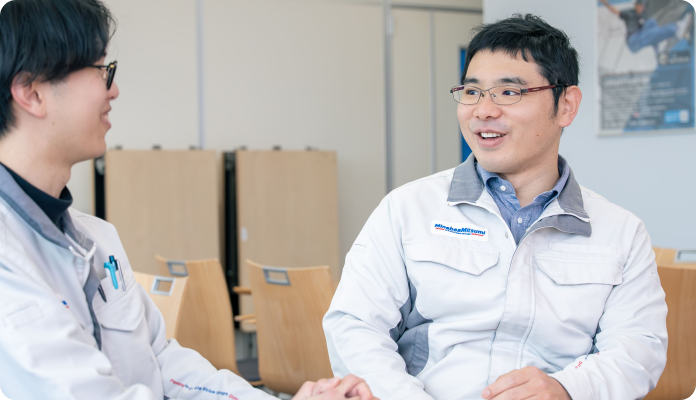
I feel the high respect and expectations from those around me on a daily basis—that “since you're a PhD, you'll figure it out.” When other departments seek technical advice, I'm entrusted with challenging cases based on the trust that “Iguchi can solve this tricky problem.” While this brings pressure, the immense satisfaction comes from meeting expectations and seeing others' joy when I deliver results. Furthermore, reading specialized papers and incorporating the latest findings flows smoothly precisely because of my doctoral background, contributing to my unique value within the company.
Q8
Please explain the connection between your current work and your doctoral research.
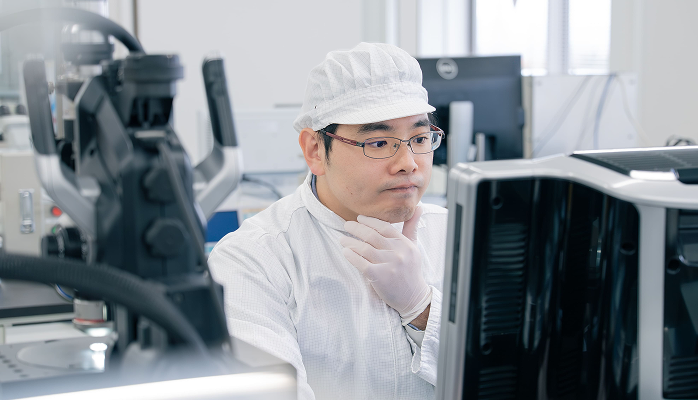
In my doctoral thesis, I elucidated the phenomenon of “why a rolling ball stops,” which is precisely the core principle of bearings. Currently, I am involved in developing materials for new products and designing and building custom equipment to evaluate them. When referencing papers that analyze chocolate's mouthfeel as friction or examining the behavior of liquids at the microscopic level, the physical intuition cultivated back then is indispensable. My research experience is deeply reflected not only in pursuing theory but also in the hands-on engineering of “device creation”—the gritty work of bringing ideas to life.
 Message to Ph.D. Students
If you are interested in this company, please visit their recruitment page.
View recruitment page >
 Message from the Recruiter


