


M.H
Production Process Technology
Department: Technology Division, MI Headquarters
Year Joined: 2024
Major: Faculty of Science, Department of Chemistry; Graduate School of Science, Division of Materials and Molecular Sciences
 panasonicについて
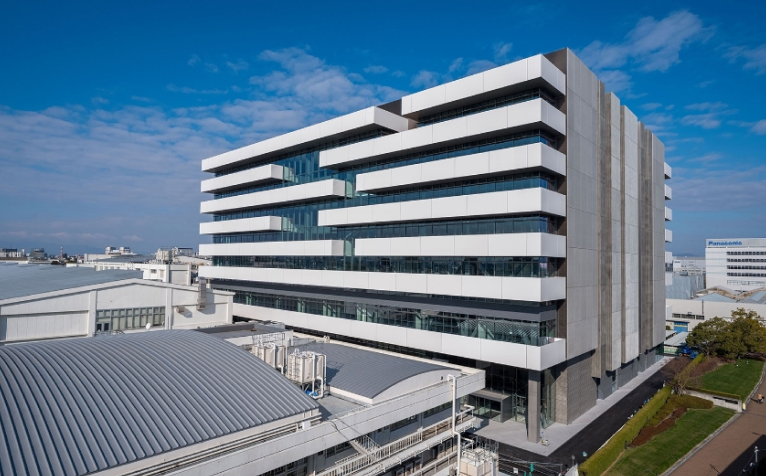
Panasonic Holdings is working to enhance the value of the entire Group through forward-looking research and development, the promotion of corporate strategies, and the strengthening of Group governance.
Within this framework, the Technology Division—as a cross-operating-company technology organization—connects research, development, production technology, DX, and GX, and is responsible for enhancing the Group’s overall technological capabilities and business creation capacity. While taking on the challenge of creating new technologies and business opportunities, the division also leverages the technologies cultivated over many years to strengthen the competitiveness of existing businesses. Furthermore, by promoting a seamless process from research to societal implementation and transforming technology into value, the division is striving to realize new businesses and drive social transformation.
In an environment that allows for challenges across a wide range of fields—from basic research to applied research and commercialization—the division contributes to improving people’s lives and realizing a sustainable society through the creation of new value driven by technology.

Ph.D. Employee Interview
Read detailed interviews about Ph.D. career choices.
Q1
Why did you choose this career path (private sector/current position)?
During my doctoral studies, I majored in physical chemistry and engaged in basic research aimed at uncovering the universal laws that govern the properties of matter. I was drawn to the opportunity to delve into the "why" behind the phenomena produced by the natural sciences. At the same time, basic research is a field that can sometimes feel distant from real-world applications. As I pursued my research, I came to realize that the process of translating research findings into products and services for society also requires people capable of probing the essence of things. I chose Panasonic Holdings as the workplace where I could best utilize those skills.
Q2
How does your current job relate to your doctoral research?

I am currently involved in technological development aimed at elucidating the degradation mechanisms of recycled materials and restoring their functionality from the perspective of production engineering. Although the research topics, materials, and scales I dealt with during my doctoral studies differ from my current work, the thought process of "breaking down the factors behind a phenomenon, formulating hypotheses, and verifying them" remains consistent. I apply this approach to product design and technical evaluations at the macroscale—including production processes—while keeping mass production, reproducibility, and collaboration with the shop floor in mind. I focus on understanding the essence of the matter and how the resulting technologies contribute to product competitiveness and manufacturing capabilities.
Q3
What "challenges and struggles" have you faced when choosing a career path or advancing your career after starting a job?

The biggest challenge I faced after joining the company was not just producing research results, but also advancing development while balancing quality, cost, and development time (QCD), all with an eye toward contributing to the business. While at university, I focused my research on fundamental correctness and interdisciplinary impact, but in the corporate world, I am required to make decisions within the constraints of limited time, budget, and on-site conditions. Furthermore, in my role in production engineering, I collaborate with a diverse range of people involved in the manufacturing process, so I found it challenging to communicate my research findings clearly and gain their understanding, tailored to their respective perspectives. Through repeated dialogue with the production floor, I am learning the importance of moving back and forth between a research-oriented perspective and a production engineering perspective to find the optimal solution.
Q4
How did you deal with "anxiety about the future" and "financial stability" while you were in school?
Amid concerns about my future and livelihood, financial matters were a particularly pressing issue. I considered the option of pursuing a Ph.D. while working full-time, but I felt that my job responsibilities might prevent me from devoting sufficient time to my research. On the other hand, in recent years, support programs from the government and private companies—beyond the Japan Society for the Promotion of Science (JSPS)—have expanded, and efforts to encourage enrollment in doctoral programs are gaining momentum. Regarding my concerns about the future, I recognized that the lack of visible role models after earning a Ph.D. was an issue, so I gathered information by speaking with people working as Ph.D.s in the corporate sector. Ultimately, I prioritized my desire to "continue this research."
Q5
Of all the "thinking processes" you developed during your doctoral program, which one is your greatest asset right now?

The most valuable skill I developed through the thought processes cultivated during my doctoral studies is the ability to systematically select and filter information while thoroughly analyzing the essence of a problem—centered on hypothesis and verification—and to move forward logically. Precisely because we live in an era where AI is advancing and access to vast amounts of information is readily available, I believe it is crucial to break down the factors governing a phenomenon and systematically clarify "why things happen the way they do." Currently, I am applying this perspective in practical settings—including production engineering—by articulating it in a way that members outside my field of expertise can understand and accept. Through discussion, I am building a shared understanding and using this approach to drive progress on technical challenges.
Q6
When it came to your job search as a Ph.D. candidate, what "qualities" of yours do you feel were valued by companies?

What I feel was valued most in my job search as a Ph.D. candidate was not so much my expertise per se, but rather my ability to translate the content and value of my research into terms that resonated with the interviewer's perspective and communicate it effectively. During interviews, I made a conscious effort to explain my research not merely in terms of the results themselves, but from the perspective of what problems it solves and how it contributes to business and manufacturing. This approach was rooted not only in my experience of completing my doctoral research but also in my experience engaging in discussions with people from diverse backgrounds in communities such as domestic and international academic conferences and young researchers' groups. As a result, I feel that I was recognized for my flexibility and communication skills in collaborating with others to overcome unknown challenges.
Q7
In what situations at work have you felt that "it was good to have a Ph.D. (that people looked up to me)"?

I've found that having a Ph.D. is particularly beneficial in situations where I need to explain technical details to an audience or speak up in settings where a variety of opinions are expressed. During my doctoral program, I gained experience presenting at numerous academic conferences both in Japan and abroad, as well as publishing papers, which helped me develop the ability to communicate my research clearly to others. As a result, I've become able to organize my arguments and respond calmly even when faced with tough questions or unexpected criticisms. I also feel that holding a Ph.D. makes it easier for me to participate in discussions within academic societies and research communities, and that this ability to build relationships based on trust is another factor that earns me respect.
Q8
Moving forward, what do you hope to accomplish in society by leveraging your expertise as a Ph.D.?

The manufacturing sector has evolved with the support of production technology, but there are still many areas that rely on the experience and intuition of frontline workers, as well as domains that have not yet been logically elucidated. We believe that the individuals capable of elucidating mechanisms based on fundamental principles and using that understanding to guide appropriate process design are the ones who will bring about breakthroughs in manufacturing. By leveraging the analytical skills I cultivated during my doctoral studies—which enable me to structurally grasp the essence of problems—I aim to contribute to the evolution of manufacturing at Panasonic Holdings by serving as a bridge between basic research and practical application, while maintaining a conscious balance between the two.
 Message to Ph.D. Students
If you are interested in this company, please visit their recruitment page.
View recruitment page >
 Message from the Recruiter


